
How to Form an LLC as a Non-Resident in 2026
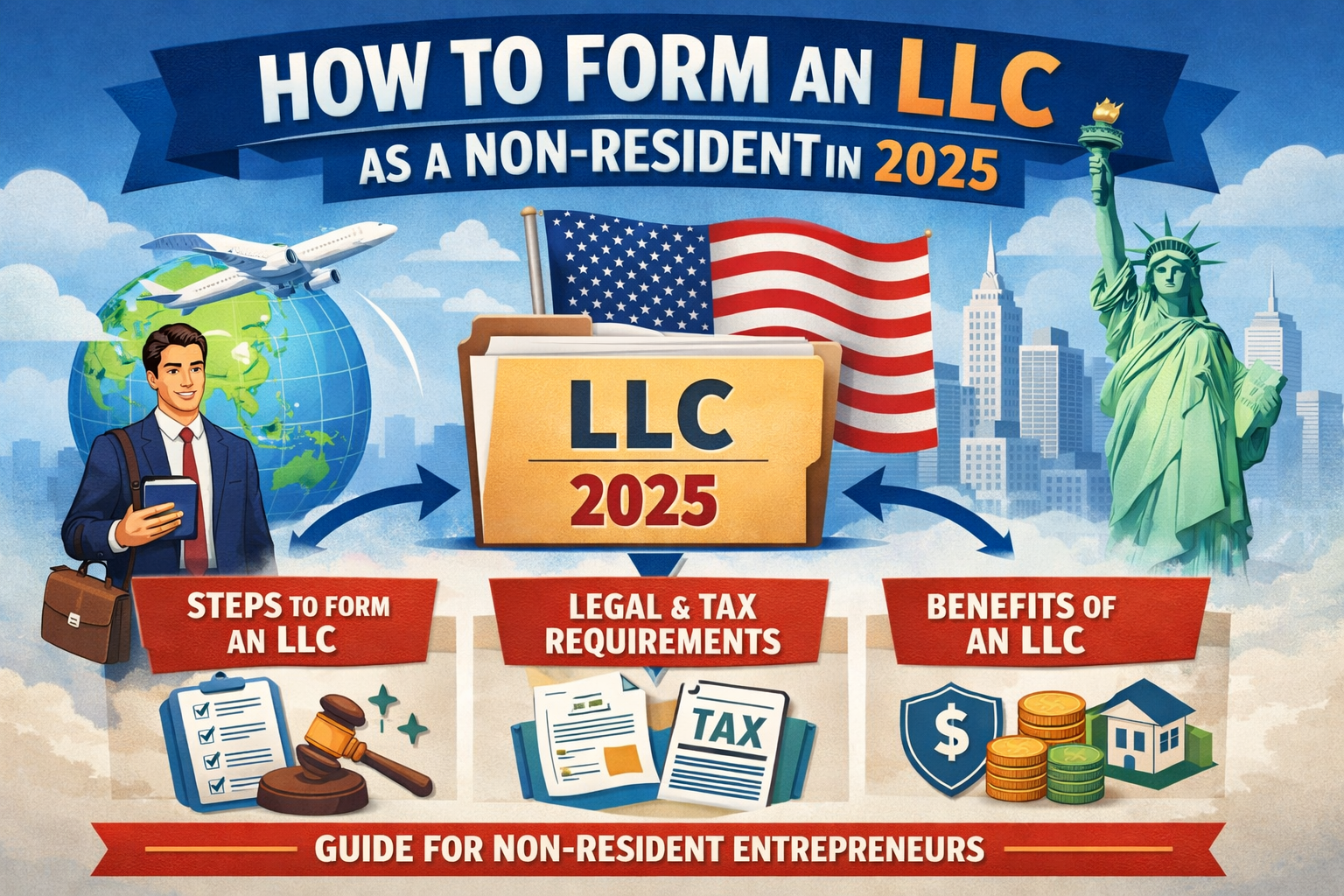
Forming an LLC as a non-resident in 2026 is an excellent opportunity for foreign entrepreneurs looking to expand their business operations into the United States. A limited liability company (LLC) provides several advantages, such as protecting personal assets, reducing liability risks, and offering flexibility in tax planning. For non-U.S. residents, this process might seem complex, but with the right guidance, it can be a straightforward and rewarding endeavor.
Whether you are a nonresident alien or a foreign entity planning to enter the U.S. market, understanding the steps, tax implications, and legal requirements is essential. This guide will walk you through the process of forming a non-resident LLC, ensuring compliance with federal laws and state-specific regulations while highlighting the benefits and challenges of this business structure.
Understanding What It Means to Form a Non-Resident LLC
What is a Limited Liability Company?
A limited liability company (LLC) is a popular business structure in the United States that combines the flexibility of a partnership with the liability protection of a corporation. It is considered a separate entity from its owners, which means the LLC owner’s personal assets, such as their home or savings, are typically protected from business debts and lawsuits. This makes it an attractive option for foreign entrepreneurs and non-U.S. residents looking to establish a presence in the U.S. market.
For foreign entrepreneurs, an LLC offers the ability to conduct business in the United States without the need for a physical presence. It also provides privacy protections in certain states, making it easier to manage business activities remotely. Furthermore, LLCs are relatively easy to establish and maintain, with fewer compliance requirements compared to other business structures like a c-corp.
The benefits of forming an LLC extend beyond liability protection. Many non-residents find that the tax advantages associated with an LLC make it an appealing choice. LLCs enjoy pass-through taxation, meaning that the profits or losses of the business are reported on the owner’s personal income tax return, avoiding the issue of double taxation that can arise with corporations. Additionally, LLC members have the flexibility to choose how they want the LLC to be taxed, such as being treated as a sole proprietorship, partnership, or corporation for tax purposes.
Who is Considered a Non-Resident?
In the context of forming a non-resident LLC, a non-resident is typically defined as a nonresident alien. According to U.S. tax laws, a nonresident alien is someone who is not a U.S. citizen and does not meet the substantial presence test or does not hold a green card. For example, a non-U.S. citizen who spends fewer than 183 days in the United States during a tax year would generally be classified as a nonresident alien. This classification is important because it determines the tax rules and filing requirements for the individual.
On the other hand, a resident alien is a non-U.S. citizen who either holds a green card or meets the substantial presence test, which may subject them to different tax obligations. While resident aliens are treated similarly to U.S. citizens for tax purposes, nonresident aliens have specific tax implications when operating a foreign-owned LLC in the United States. Understanding these distinctions is crucial for ensuring compliance with U.S. tax laws and avoiding potential penalties.
Foreign-owned LLCs are specifically designed to allow non-U.S. residents and foreign entities to establish a U.S. business without needing to be physically present in the country. These LLCs offer significant opportunities for accessing the U.S. market, opening a U.S. bank account, and conducting business activities globally. However, non-resident LLC owners must comply with U.S. tax obligations, including filing tax forms such as Form 5472 and, in some cases, Form 1040NR.
Choosing the Best States for a Non-Resident LLC
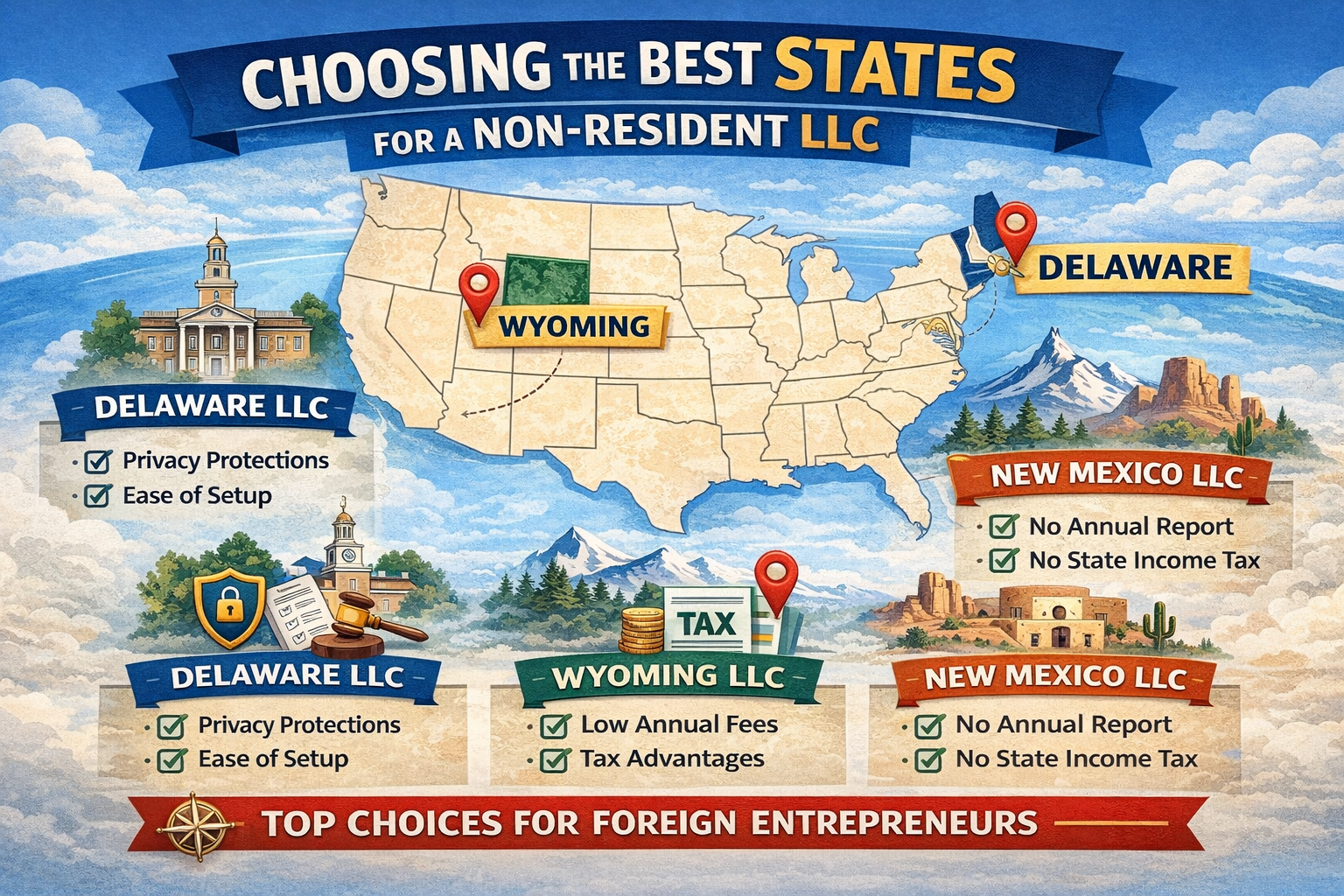
When forming a non-resident LLC, selecting the right state is one of the most important decisions. Not all states are created equal when it comes to LLC formation, and factors such as state taxes, annual fees, and privacy protections can vary widely. For foreign entrepreneurs, choosing a state that offers favorable tax advantages and a streamlined business environment can make a significant difference.
Delaware LLC: Privacy Protections and Ease of Setup
Delaware is widely recognized as one of the best states for forming an LLC, particularly for non-U.S. residents. It offers robust privacy protections, as the state does not require LLC members to disclose their personal information publicly. Additionally, Delaware has a well-established legal system that is favorable to businesses, with clear and predictable state laws governing LLCs.
Another advantage of forming a Delaware LLC is its ease of setup. The state provides efficient processing through the secretary of state’s office, making it a popular choice for foreign entrepreneurs. While Delaware does impose an annual franchise tax, the costs are generally reasonable and are outweighed by the benefits of doing business in a business-friendly state.
Wyoming LLC: Low Annual Fees and Tax Advantages
Wyoming is another excellent option for non-residents looking to form LLC. It is known for its low annual fees and lack of state income tax, which can significantly reduce the tax burden for LLC owners. Like Delaware, Wyoming also offers strong privacy protections by not requiring public disclosure of LLC members’ identities.
Additionally, Wyoming LLCs are not subject to franchise tax, making it a cost-effective choice for many foreign entrepreneurs. The state’s business environment is supportive of foreign-owned LLCs, and the formation process is straightforward, requiring minimal paperwork. These features make Wyoming a top choice for those seeking both affordability and simplicity in their LLC formation.
New Mexico LLC: No Annual Report or State Income Tax
New Mexico stands out as a unique option for forming a non-resident LLC because it does not require LLCs to file an annual report. This reduces ongoing compliance requirements and helps keep the LLC in good standing without additional administrative burdens. Furthermore, New Mexico does not impose a state income tax on LLCs, providing a significant tax advantage for foreign-owned LLCs with minimal or no source income in the state.
Another benefit of forming a New Mexico LLC is the low cost of formation and maintenance. The state has a simple filing process, and the absence of annual fees makes it an attractive option for entrepreneurs looking to minimize costs. However, it’s important to consider the specific needs of your business, as New Mexico may not be the right choice for everyone depending on your business activities and tax obligations.
Ultimately, the best state for your non-resident LLC will depend on your unique circumstances, including your business goals, tax implications, and the level of privacy you desire. Carefully evaluating the benefits and requirements of each state will help ensure that you choose the most suitable location for your LLC.
Steps to Form an LLC as a Non-U.S. Resident
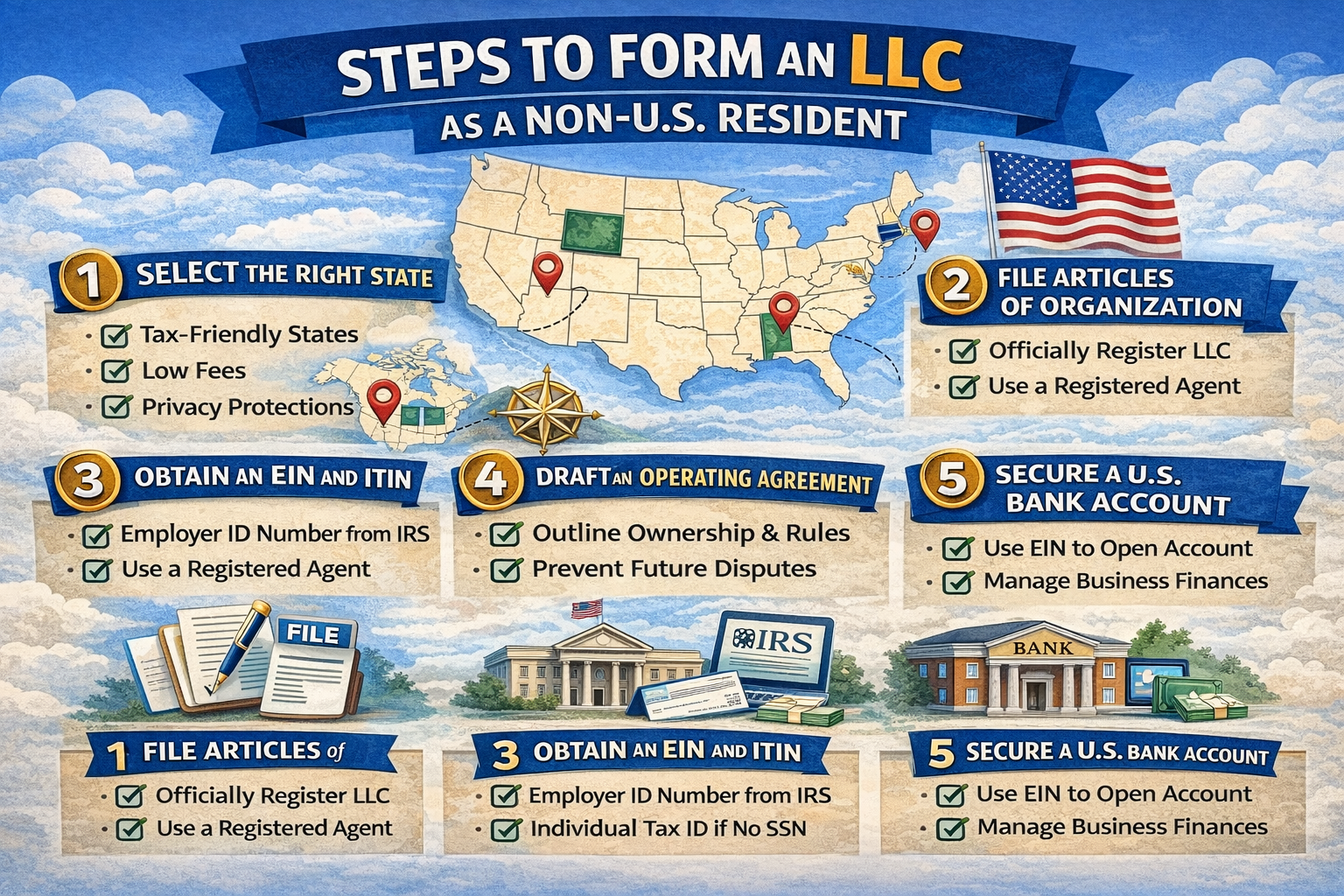
1. Select the Right State
Choosing the right state to form your LLC is the first and most critical step in the business formation process. Each state in the U.S. has its own set of state laws and tax implications, which can significantly impact your LLC’s operations and profitability. For instance, some states, such as Delaware, Wyoming, and New Mexico, are known for being particularly business-friendly for foreign entrepreneurs. These states offer advantages such as low annual fees, no state income tax, and strong privacy protections.
When selecting a state, consider factors such as state taxes, franchise tax requirements, and whether the state mandates an annual report. For example, Delaware imposes a franchise tax but offers a favorable legal environment, while New Mexico does not require an annual report, reducing administrative burdens. Additionally, ensure that your chosen state aligns with your business goals and activities. If your business generates source income in a particular state, you may be subject to state income tax in that jurisdiction.
Remember that your LLC does not need to operate in the state where it is formed. Many non-U.S. residents choose their state based on tax advantages and ease of compliance rather than their physical presence or principal place of business. This flexibility allows you to optimize your LLC’s setup based on your specific needs. If you want professional help, you can form your LLC in the USA directly from our homepage with step-by-step guidance.
2. File Articles of Organization
Once you’ve chosen the right state, the next step is to file articles of organization with the secretary of state. This document officially registers your LLC and includes key details such as your LLC’s name, business address, and mailing address. The business address does not have to be a physical address, but it must be a valid street address in the state where the LLC is being formed. Many foreign entrepreneurs use a registered agent service to fulfill this requirement.
The filing process varies by state but generally involves submitting your articles of organization online or by mail, along with a filing fee. The fee amount depends on the chosen state and can range from $50 to several hundred dollars. Ensure that the information provided in the articles of organization is accurate and complete to avoid delays in the approval process.
Some states may also require additional documents, such as a certificate of incorporation, to complete the formation process. Be sure to review the specific requirements of your chosen state and work with a formation service if needed to ensure compliance.
3. Obtain an EIN and ITIN
After filing the articles of organization, the next step is to apply for an Employer Identification Number (EIN) from the Internal Revenue Service (IRS). An EIN is a unique identifier for your LLC and is required for various purposes, including opening a U.S. business bank account, filing tax forms, and hiring employees. Non-U.S. residents can apply for an EIN by completing Form SS-4 and submitting it to the IRS. The process can be completed online, by fax, or by mail, although online applications are typically the fastest.
If you do not have a Social Security Number (SSN), you may need to obtain an Individual Taxpayer Identification Number (ITIN) to fulfill certain tax obligations. An ITIN is issued by the IRS to individuals who are not eligible for an SSN but need to pay taxes or file tax returns in the United States. The application process for an ITIN involves completing Form W-7 and submitting it along with supporting documents, such as a passport copy, to the IRS.
Having an EIN and ITIN ensures that your LLC is compliant with federal tax rules and can operate smoothly. It is also essential for meeting your tax obligations as a non-resident LLC owner.
4. Draft an Operating Agreement
An operating agreement is a critical document for LLC members, as it outlines the rules, responsibilities, and ownership interest of each member. While most states do not require LLCs to have an operating agreement, it is highly recommended, especially for foreign-owned LLCs. This document helps prevent disputes among members and provides a clear framework for managing the LLC’s business activities.
The operating agreement should include details such as the allocation of profits and losses, the decision-making process, and procedures for adding or removing members. It should also specify the LLC’s principal place of business and outline the roles and responsibilities of each member. For single-member LLCs, the operating agreement serves as a record of the owner’s intentions and can be useful for maintaining the LLC’s separate entity status.
For non-U.S. residents, having a well-drafted operating agreement can also demonstrate the legitimacy of the LLC when dealing with banks, investors, or government agencies. Consider working with a legal professional to ensure that your operating agreement meets all legal requirements and protects your interests.
5. Secure a U.S. Bank Account
Opening a U.S. business bank account is essential for managing your LLC’s finances and conducting transactions in the United States. A U.S. bank account allows you to separate your personal finances from your business income, which is crucial for maintaining the limited liability protection offered by your LLC. It also makes it easier to receive payments from U.S.-based clients or customers.
To open a U.S. business bank account, you will typically need an EIN, a copy of your LLC’s articles of organization, and proof of your business address or mailing address. Some banks may also require a physical presence in the U.S., but others offer options for foreign entrepreneurs to open accounts remotely. Researching banks that cater to non-U.S. residents can help streamline the process.
A U.S. business bank account is not only a practical necessity but also a sign of credibility for your LLC. It demonstrates that your LLC is a legitimate U.S. company, which can be beneficial when working with clients, suppliers, or investors. Additionally, having a U.S. bank account simplifies tax filing and ensures compliance with U.S. tax rules.
Tax Implications for Non-Resident LLC Owners
U.S. Tax Obligations and Filing Requirements
Non-resident LLC owners must understand and comply with U.S. tax obligations to avoid penalties and maintain their LLC in good standing. One of the key considerations is whether the LLC generates source income or connected income in the United States. Source income refers to income earned from activities conducted within the U.S., while connected income is income that has a direct link to U.S. business operations.
Foreign-owned LLCs are required to file Form 5472 with the IRS to report certain transactions between the LLC and its foreign members or related parties. This form is essential for ensuring transparency and compliance with U.S. tax laws. Additionally, nonresident aliens may need to file Form 1040NR to report their U.S. income and pay taxes owed.
It’s important to note that LLCs with more than one member are treated as partnerships for tax purposes and must file Form 1065. Single-member LLCs, on the other hand, are treated as disregarded entities by default, meaning the owner reports the LLC’s income on their individual tax return. Non-resident LLC owners should consult a tax professional to determine the correct filing requirements and ensure compliance with all applicable tax rules.
Other Requirements for Foreign Entrepreneurs
In addition to forming and maintaining an LLC, non-U.S. residents must meet other requirements to operate their businesses successfully in the United States. These requirements include obtaining the necessary business licenses, providing a valid physical address or mailing address, and preparing essential documentation like a certificate of incorporation. Ensuring compliance with these requirements is key to staying in good standing and avoiding legal or administrative issues.
Obtaining Business Licenses and Permits
Depending on the nature of your business activities and the state in which your LLC operates, you may need to obtain specific business licenses and permits. These licenses ensure that your LLC complies with federal, state, and local regulations. For instance, if your LLC operates in industries like real estate, healthcare, or food services, you may be required to secure industry-specific permits before commencing operations.
Many states provide online portals where you can check the licensing requirements for your business type. While the process and fees for obtaining licenses vary by location and industry, failing to secure the necessary permits can result in fines or even the suspension of your LLC’s operations. Working with a formation service or consulting a legal expert can help simplify this process and ensure that you meet all licensing requirements.
Providing a Physical Address or Mailing Address
One of the logistical challenges for foreign entrepreneurs is providing a physical address or mailing address in the United States. Most states require LLCs to list a business address when filing the articles of organization. While this address does not need to be a physical office location, it must be a valid U.S. street address where official correspondence can be sent. A post office box typically does not meet this requirement.
Many foreign-owned LLCs use a registered agent service to fulfill this requirement. A registered agent is an individual or company authorized to receive legal and tax documents on behalf of the LLC. These services often include the use of their address as your LLC’s official mailing address, ensuring compliance with state regulations. Choosing a reliable registered agent can save time and provide peace of mind.
Certificate of Incorporation and Other Documents
Although LLCs are not corporations, some states require a certificate of incorporation or similar documents as part of the business formation process. This certificate serves as proof that your LLC has been officially registered with the state and is authorized to conduct business. It may be required when opening a U.S. bank account or applying for business licenses.
In addition to the certificate of incorporation, you may need to prepare other documents, such as your operating agreement, EIN confirmation letter, and proof of compliance with state laws. Keeping these documents organized and readily available is crucial for managing your LLC efficiently and addressing any legal or administrative requirements that may arise.
Meeting these requirements ensures that your LLC operates legally and smoothly, setting the foundation for long-term success in the U.S. market.
LLC vs. Other Business Structures
When deciding to form an LLC, it’s important to understand how this structure compares to other business entities. Two common alternatives to LLCs are sole proprietorships and corporations, particularly c corporations. Each structure has its own set of advantages and disadvantages, and the right choice will depend on your business goals, tax implications, and the level of liability protection you require.
LLC vs. Sole Proprietorship
A sole proprietorship is the simplest form of business structure and is often chosen by individuals who want to start a small business with minimal setup costs. However, unlike an LLC, a sole proprietorship does not provide liability protection. The owner is personally responsible for all business debts and legal obligations, putting their personal assets at risk in the event of a lawsuit or financial difficulty.
In contrast, an LLC is a separate entity from its owners, meaning that the owner’s liability is limited to their investment in the business. This separation protects personal assets such as homes, cars, and savings accounts from being used to settle business debts. Additionally, LLCs offer more flexibility in terms of tax benefits. For example, LLC owners can choose pass-through taxation, which allows business income to be reported on the owner’s personal income tax return, avoiding the double taxation often associated with corporations.
While a sole proprietorship may be suitable for small-scale operations, an LLC is generally a better choice for foreign entrepreneurs seeking liability protection, tax advantages, and a professional business presence in the United States.
LLC vs. C Corporation
A c corporation, or c-corp, is another common business structure in the U.S. Unlike an LLC, a c corporation is subject to double taxation, meaning the company pays taxes on its profits at the corporate level, and shareholders pay taxes again on dividends. For non-U.S. residents, this can significantly increase the tax burden compared to the pass-through taxation offered by LLCs.
However, c corporations do have advantages, particularly for businesses seeking to raise venture capital or go public. C corporations can issue stock and attract investors more easily than LLCs, making them a preferred choice for startups with ambitious growth plans. Additionally, c corporations are often better suited for businesses with multiple shareholders or complex ownership structures.
On the other hand, LLCs provide greater flexibility in management and taxation. LLC members have more control over how the business is run and can allocate profits and losses in a way that suits their needs. For foreign entrepreneurs who value simplicity, tax efficiency, and asset protection, an LLC is often the preferred choice over a c corporation.
Ultimately, the decision between forming an LLC, sole proprietorship, or c corporation will depend on your specific business goals, the level of risk you are willing to assume, and your long-term vision for your U.S. business.
Maintaining Your Non-Resident LLC
Once your non-resident LLC is established, maintaining compliance with state and federal laws is essential to keep your business in good standing. Ongoing responsibilities include filing an annual report, paying annual fees and franchise tax, updating your LLC’s business address, and adhering to state LLC regulations. Ensuring these requirements are met on time will help you avoid penalties, fines, or even the dissolution of your LLC.
Filing an Annual Report to Stay in Good Standing
Many states require LLCs to file an annual report to provide updated information about the business. This report often includes details like the LLC’s business address, mailing address, and the names of its members or managers. Filing deadlines and fees vary by state, so it’s important to check the specific requirements for your chosen state. For instance, Delaware LLCs must pay an annual franchise tax along with their report, while New Mexico LLCs do not require an annual report at all.
Failing to file an annual report on time can result in penalties or the revocation of your LLC’s good standing status. Maintaining good standing is crucial for preserving your LLC’s legal protections and credibility. To avoid missing due dates, consider setting reminders or using a registered agent service that offers compliance assistance.
Paying Annual Fees and Franchise Tax on Time
In addition to filing an annual report, most states require LLCs to pay annual fees or franchise tax. These costs vary by state and are typically used to fund state services and infrastructure. For example, Delaware charges a flat annual franchise tax for LLCs, while Wyoming has minimal fees and no franchise tax, making it a cost-effective option for foreign entrepreneurs.
Timely payment of these fees is essential to maintaining your LLC’s active status. Nonpayment can lead to fines, interest charges, or the suspension of your LLC. Keeping track of your state’s due dates and fee requirements will help ensure your LLC remains in compliance and operates without interruption.
Updating Your Business Address and Phone Number
Keeping your LLC’s business address, mailing address, and phone number up to date is another key part of maintaining compliance. These details are often required for filing state documents, renewing licenses, or receiving official correspondence. If your LLC changes its principal place of business or registered agent, you must notify the secretary of state promptly to ensure your records are accurate.
Failure to update this information can lead to missed communications or noncompliance with state laws. For foreign entrepreneurs, using a reliable registered agent service can simplify this process by ensuring your LLC’s address is always current and accessible.
Meeting State LLC Regulations and Due Dates
Each state has its own set of regulations and deadlines that LLCs must follow to remain in good standing. These include filing requirements, tax obligations, and compliance with state-specific laws. For example, some states require LLCs to publish a notice of formation in a local newspaper, while others have specific rules about the types of business activities allowed.
Non-resident LLC owners should familiarize themselves with the regulations of their chosen state and work with a tax professional or legal expert to ensure compliance. Missing deadlines or failing to meet state requirements can jeopardize your LLC’s legal protections and lead to additional costs. Staying organized and proactive will help you maintain your LLC’s status and avoid unnecessary complications.
Is a Non-Resident LLC Right for You?
Deciding whether to form a non-resident LLC depends on your business goals, home country’s tax laws, and the nature of your U.S. business activities. An LLC offers significant benefits, including liability protection, tax advantages, and access to the U.S. market, but it also comes with responsibilities like tax filings and compliance with state laws. Carefully evaluating these factors will help you determine whether this structure aligns with your long-term objectives.
If you’re ready to navigate the business formation process and take advantage of the U.S. market, a non-resident LLC may be the perfect choice. Consulting with a tax professional or legal expert can help you understand the implications and ensure a smooth setup process. With proper planning, a non-resident LLC can be a powerful tool for achieving your business ambitions in 2025 and beyond.