
LLC vs Corporation for Non-Residents: Choosing the Right Structure
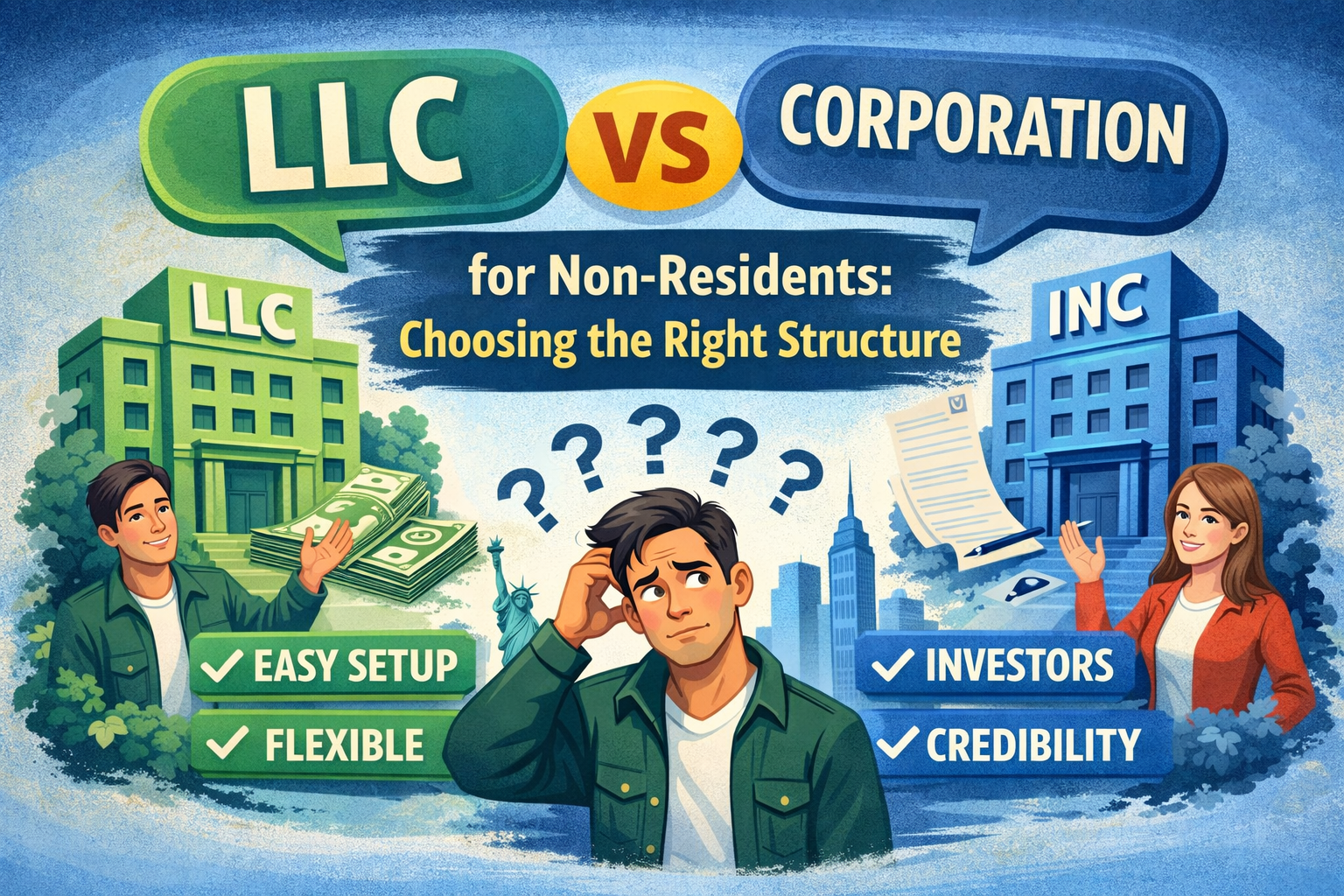
For foreign entrepreneurs looking to establish a business in the United States, choosing between an LLC and a corporation can be a crucial decision. Understanding the differences between these two structures is key to aligning your business goals with the right tax advantages and legal protections. The primary keyword here is determining the best option for non-residents to navigate US tax laws effectively.
Both an LLC and a corporation offer unique benefits and come with specific compliance requirements. This guide will help you weigh the advantages and disadvantages of each business type, ensuring you make an informed decision that meets your needs as a non-US resident looking to operate in the United States.
Overview of LLCs and Corporations in the United States
When foreign entrepreneurs explore business opportunities in the United States, they often find themselves deciding between forming a limited liability company (LLC) or a corporation (C-Corp). Both structures offer distinct advantages and come with specific responsibilities. Before making a decision, it is crucial to understand the key features, tax implications, and legal frameworks that define each business type.
LLCs and corporations are two of the most popular business structures for non-residents. While LLCs are known for their flexibility and simplified tax treatment, corporations often appeal to those seeking a more formal structure and robust personal liability protection. Let’s take a closer look at each option to determine how they align with your business goals and compliance requirements.
What is a Limited Liability Company (LLC)?
A limited liability company (LLC) is a popular business structure for foreign entrepreneurs because of its simplicity, flexibility, and strong liability protection. An LLC is a hybrid entity that combines the limited liability protection of a corporation with the tax benefits and operational simplicity of a sole proprietorship or partnership. This makes it particularly attractive for small business owners who want to minimize legal and financial risks.
One of the primary advantages of forming an LLC is the limited liability protection it offers to its members. This means that the personal assets of the LLC members are generally protected from business debts and liabilities. Whether the LLC has a single member or multiple members, this protection remains a key feature. Furthermore, LLCs are considered pass-through entities for federal tax purposes, meaning profits and losses are reported on the members’ personal income tax returns instead of being taxed at the entity level.
Another appealing aspect of LLCs is the flexibility they offer in terms of ownership structure. A single-member LLC is owned by one individual or entity, while a multi-member LLC can have multiple owners. For tax filings, single-member LLCs are often treated as disregarded entities, meaning they are not considered separate entities from their owners for tax purposes. This simplifies the tax filing process for foreign owners, provided they comply with U.S. tax laws and filing requirements.
What is a Corporation (C-Corp)?
A corporation, specifically a C-Corp, is a separate legal entity that is distinct from its owners. This corporate structure is ideal for businesses looking to scale, attract investors, or establish a more formal governance system. The hallmark of a C-Corp is its structured management, which includes a board of directors and officers responsible for overseeing the company’s operations and strategic decisions.
Unlike an LLC, a C-Corp is subject to double taxation. This means the corporation pays corporate income tax on its profits at the entity level, and shareholders pay taxes again on dividends received, which are reported on their personal income tax returns. While this may seem like a disadvantage, many foreign entrepreneurs find the corporate structure appealing because of its ability to attract investors and provide a clear framework for ownership and management.
Corporations also have more stringent filing requirements compared to LLCs. They must file annual reports, maintain detailed legal documents such as bylaws, and hold regular annual meetings. This ensures transparency and accountability but also adds to the compliance requirements. For non-residents, understanding these obligations is critical to avoiding penalties and ensuring long-term success in the U.S. market.
Ownership and Residency Requirements
Ownership and residency rules are vital considerations when deciding between forming an LLC or a corporation. Non-residents often wonder whether they can own these business entities without being U.S. citizens or permanent residents. The good news is that both LLCs and corporations are open to foreign entrepreneurs, but their specific requirements and implications differ significantly.
LLC Ownership Rules for Non-Residents
One of the most appealing aspects of forming an LLC in the United States is that there are no residency requirements for its owners. Non-resident LLC owners can establish a U.S. LLC without being a U.S. resident or holding a green card. This makes the LLC an excellent option for foreign entrepreneurs looking to engage in U.S. trade or invest in U.S. real estate.
During the formation process, non-residents must designate a registered agent. This individual or entity acts as a point of contact for receiving legal documents and notices on behalf of the LLC. The registered agent must have a physical address in the state where the LLC is formed. This requirement ensures compliance with state laws and facilitates communication between the LLC and government authorities.
In terms of ownership structure, non-residents can form either a single-member LLC or a multi-member LLC. While a single-member LLC provides simplicity and ease of management, a multi-member LLC can offer additional advantages, such as shared responsibilities and diversified financial resources. However, foreign-owned LLCs must comply with specific tax laws, including filing Form 5472 with the Internal Revenue Service (IRS) to report transactions between the LLC and its foreign owners.
C-Corp Ownership Rules for Foreign Entrepreneurs
Corporations are also open to non-U.S. residents, making them a viable option for foreign entrepreneurs who want to establish a business in the United States. Unlike LLCs, corporations are more structured and require a formal corporate structure that includes shareholders, a board of directors, and officers. This structure is particularly beneficial for businesses seeking to attract investors or issue stock.
Foreign owners of a C-Corp must adhere to strict compliance requirements, including maintaining detailed records of ownership and corporate activities. Resident aliens and green card holders who own shares in a corporation must also consider their tax obligations under U.S. tax laws. While there are no restrictions on foreign ownership of a corporation, non-residents should be aware of the legal implications and filing requirements associated with this business structure.
In addition, corporations must pay taxes on their income at the corporate tax rate, which differs from the pass-through taxation enjoyed by LLCs. However, corporations may benefit from tax treaties between the United States and the owner’s home country, which can help reduce double taxation and provide other tax advantages. Understanding these tax considerations is crucial for foreign entrepreneurs to make the right decision.
Tax Implications and Compliance Requirements
When deciding between an LLC and a corporation, tax implications and compliance requirements often play a significant role for non-residents. The U.S. tax system can be complex, especially for foreign entrepreneurs unfamiliar with the country’s tax laws. Both LLCs and corporations come with distinct tax treatments and obligations, and understanding these is essential for making an informed choice.
LLC Tax Treatment
One of the key benefits of an LLC is its pass-through taxation. For federal tax purposes, the LLC itself does not pay corporate income tax. Instead, the profits and losses of the business are passed through to the LLC members, who report them on their personal income tax returns. For non-residents, this typically means paying taxes only on U.S.-sourced income, provided there is no tax treaty between the U.S. and the owner’s home country that dictates otherwise.
However, foreign-owned LLCs are subject to additional compliance requirements. For instance, an LLC with foreign members must file Form 5472 with the IRS to disclose certain transactions between the LLC and its foreign owners. This filing is mandatory for single-member LLCs classified as disregarded entities for tax purposes. Additionally, LLC members are responsible for self-employment taxes, which include contributions to Social Security and Medicare, unless exempt under a tax treaty.
LLCs may also be subject to state income tax, depending on the state where the LLC is formed or operates. For businesses involved in selling goods, sales tax compliance is another critical aspect to consider. Non-residents must ensure they meet all state-level tax obligations to remain compliant. While LLCs offer significant tax advantages, they require careful tax planning and recordkeeping to avoid penalties.
C-Corp Tax Considerations
Unlike LLCs, corporations face double taxation. First, the corporation pays corporate income tax on its profits at the entity level. Then, when these profits are distributed to shareholders as dividends, the shareholders must report this income on their personal tax returns and pay taxes accordingly. This double taxation can be a drawback for some foreign entrepreneurs, but it may be mitigated through strategic tax planning and the use of tax treaties.
The corporate tax rate in the United States is often a key consideration for foreign entrepreneurs. While the rate may vary depending on federal and state tax laws, it is generally more predictable compared to the tax treatment of LLCs. Corporations are also required to file a federal income tax return annually, using forms like the standard corporate tax return. Additionally, they must comply with state tax filing requirements and may be subject to franchise taxes in certain states.
For foreign entrepreneurs, owning a C-Corp can also provide access to corporate tax benefits, such as the ability to reinvest profits into the business before taxes are paid out as dividends. These benefits make corporations particularly appealing for businesses planning to scale or attract investors. However, maintaining compliance with IRS filing requirements and ensuring accurate tax filings are critical to avoiding legal complications.
IRS Compliance and Tax Filing
Regardless of whether you choose an LLC or a corporation, compliance with IRS regulations is non-negotiable. Both business structures require an employer identification number (EIN), which serves as the business’s tax ID for federal tax purposes. Non-residents can obtain an EIN by applying directly through the IRS, even if they do not have a Social Security number or individual taxpayer identification number.
For LLCs, multi-member LLCs must file Form 1065, the partnership tax return, while single-member LLCs may report income and expenses directly on the owner’s personal income tax return, depending on their tax classification. In contrast, corporations must file a corporate income tax return annually and may also need to submit additional forms based on their activities and ownership structure. Accurate recordkeeping and timely tax filings are essential to staying compliant.
Sales tax, state income tax, and franchise taxes are additional considerations for both LLCs and corporations. Each state has its own tax laws, and failing to comply with state-level requirements can result in fines or penalties. Non-residents must also be mindful of international tax treaties, which may impact their tax liabilities and obligations in both the U.S. and their home country.
Key Considerations When Choosing Between LLC and Corporation
Choosing between an LLC and a corporation involves evaluating multiple factors, from business goals and tax implications to compliance requirements and asset protection. Non-residents should carefully assess their specific needs and long-term objectives to determine the right business structure for their U.S. operations.
Business Goals and Asset Protection
For many foreign entrepreneurs, business goals play a pivotal role in selecting the right structure. LLCs offer greater flexibility and simplicity, making them a good choice for small business owners or those engaging in limited business activities. They provide substantial asset protection, shielding personal assets from business debts and liabilities. This is particularly valuable for businesses operating in high-risk industries or with significant financial exposure.
On the other hand, corporations provide stronger personal liability protection due to their separate legal entity status. This makes them suitable for businesses planning to scale, attract investors, or operate in multiple states. The formal corporate structure, including a board of directors and annual meetings, ensures greater accountability and governance, which can be appealing to investors and stakeholders.
Tax Benefits and Implications
Tax considerations are among the most significant factors for non-residents choosing between an LLC and a corporation. LLCs often provide tax advantages due to their pass-through taxation, which eliminates the issue of double taxation. This can result in lower overall tax liabilities for foreign entrepreneurs, especially if their home country has a favorable tax treaty with the U.S.
For corporations, the ability to retain earnings and reinvest them into the business can offer significant tax benefits. However, the impact of double taxation on dividends should not be overlooked. Non-residents must also consider how U.S.-sourced income will affect their overall tax obligations, both in the United States and their home country. Consulting a tax advisor familiar with international tax laws is highly recommended to maximize tax benefits and avoid pitfalls.
Compliance and Recordkeeping
Compliance requirements and recordkeeping obligations also vary between LLCs and corporations. LLCs generally have fewer formalities, with no need for annual meetings or extensive legal documents. However, they must still file tax forms, pay any applicable franchise taxes, and comply with secretary of state requirements. Accurate recordkeeping is essential to meet these obligations and avoid penalties.
Corporations, in contrast, must adhere to more stringent compliance standards. This includes holding annual meetings, maintaining detailed minutes, and filing annual reports. These requirements ensure transparency and accountability but also require more time and resources to manage. Filing fees and other administrative costs may also be higher for corporations compared to LLCs. Foreign entrepreneurs should weigh these factors carefully when making their decision.
Making the Right Business Decision as a Foreign Entrepreneur
Deciding between an LLC and a corporation as a non-resident entrepreneur ultimately depends on your unique business goals, tax considerations, and long-term vision. Both structures offer significant advantages, but each comes with its own set of compliance requirements, tax implications, and operational complexities. Carefully evaluating these factors can help ensure you select the right business structure to support your U.S. business activities.
If your primary focus is on flexibility, ease of management, and minimizing tax burdens, an LLC may be the best choice. LLCs offer the benefit of pass-through taxation, reduced compliance obligations, and strong asset protection for foreign owners. Additionally, the ability to form a single-member LLC or a multi-member LLC provides flexibility in ownership structure, making it a practical option for small business owners or those just entering the U.S. market.
On the other hand, if your business plans include scaling, attracting investors, or operating in a more formal corporate environment, a C-Corp may be a better fit. Corporations provide stronger personal liability protection and a more established framework for governance and ownership. While double taxation is a consideration, the corporate structure’s ability to retain earnings and leverage tax treaties can offset some of these drawbacks, especially for foreign entrepreneurs with significant capital to invest.
Ultimately, making the right decision requires a thorough understanding of U.S. tax laws, compliance requirements, and the implications of U.S.-sourced income on your overall tax liability. Consulting with a tax advisor or legal expert experienced in U.S. company formation for non-residents is highly recommended. This guidance can help you navigate the complexities of forming a U.S. business and ensure you meet all legal and financial obligations while maximizing the benefits of your chosen structure.